Table of Contents
The Siren Song of the Atlantic
Imagine a city where the scent of sea salt mingles with the sweet perfume of thuya wood and the exotic aroma of spices. Where the endless rhythm of Atlantic waves crashes against ancient ramparts, and the sky is painted with the frantic dance of seagulls and the graceful glide of kitesurfers. Welcome to Essaouira, Morocco: The Atlantic Jewel – often dubbed the “Wind City,” the “Atlantic Jewel,” or even the “African Woodstock.” Far from the bustling imperial cities of Marrakech or Fes, Essaouira offers a refreshing escape, a coastal haven with a bohemian spirit, a rich history, and a vibrant culture. This guide will take you on an in-depth journey through everything Essaouira has to offer, from its UNESCO-listed medina to its artistic soul, its culinary delights, and its exhilarating watersports. Get ready to uncover the magic of Mogador.
I. Tapestry of History: From Mogador to Essaouira
Essaouira’s charm is deeply rooted in its fascinating past, a narrative woven with threads of Phoenician trade, Roman influence, Portuguese conquest, and a strategic vision that transformed it into a masterpiece of urban planning.
Ancient Roots and Phoenician Echoes
Long before it bore the name Essaouira, this natural harbour was known to ancient mariners. Archaeological evidence suggests Phoenician settlements and later, Roman presence, drawn by the lucrative murex dye, a purple pigment extracted from sea snails, crucial for imperial robes. The nearby Iles Purpuraires (Purple Islands) bear testament to this ancient industry.
The Portuguese Interlude: Castelo Real de Mogador
The 15th century saw the arrival of the Portuguese, who established a fortress, Castelo Real de Mogador, in 1506. While their stay was brief, their influence left an indelible mark, particularly on the city’s early defensive architecture. The term “Mogador” itself is thought to derive from the Portuguese or perhaps a Berber word meaning “safe haven.”
Sultan Sidi Mohammed ben Abdallah’s Vision: The Birth of Essaouira
The true birth of modern Essaouira, as we know it, came in the 18th century under the visionary Alaouite Sultan Sidi Mohammed ben Abdallah (Mohammed III). Seeking to establish a secure, deep-water port to facilitate trade with Europe and bypass rival ports, he commissioned a French architect, Théodore Cornut, pupil of Vauban, to design and build a new city from scratch. The result was a fortified medina, meticulously planned on a grid system, a stark contrast to the organic labyrinths of other Moroccan cities. Essaouira, meaning “the small fortress” or “the well-designed one” in Berber, quickly flourished as a vital international trading hub, attracting merchants, diplomats, and artisans from across the globe.
Melting Pot of Cultures: Jews, Berbers, Arabs, and Europeans
Essaouira’s unique history fostered an incredibly diverse population. Jewish merchants, known for their acumen and international connections, played a crucial role in the city’s prosperity. Alongside them, Berber and Arab populations contributed to the cultural mosaic, enriched by European influences from trade. This blend of cultures is still palpable in the city’s tolerant and open atmosphere.
The Hippie Trail and Modern Revival
In the 1960s and 70s, Essaouira gained international fame as a stop on the “Hippie Trail,” attracting artists, musicians, and free spirits, including legends like Jimi Hendrix and Cat Stevens. This era cemented Essaouira’s reputation as a bohemian, artistic haven. Today, it continues to draw a diverse crowd, from artists and surfers to families and culture enthusiasts. `
II. Exploring the Medina: A UNESCO World Heritage Site
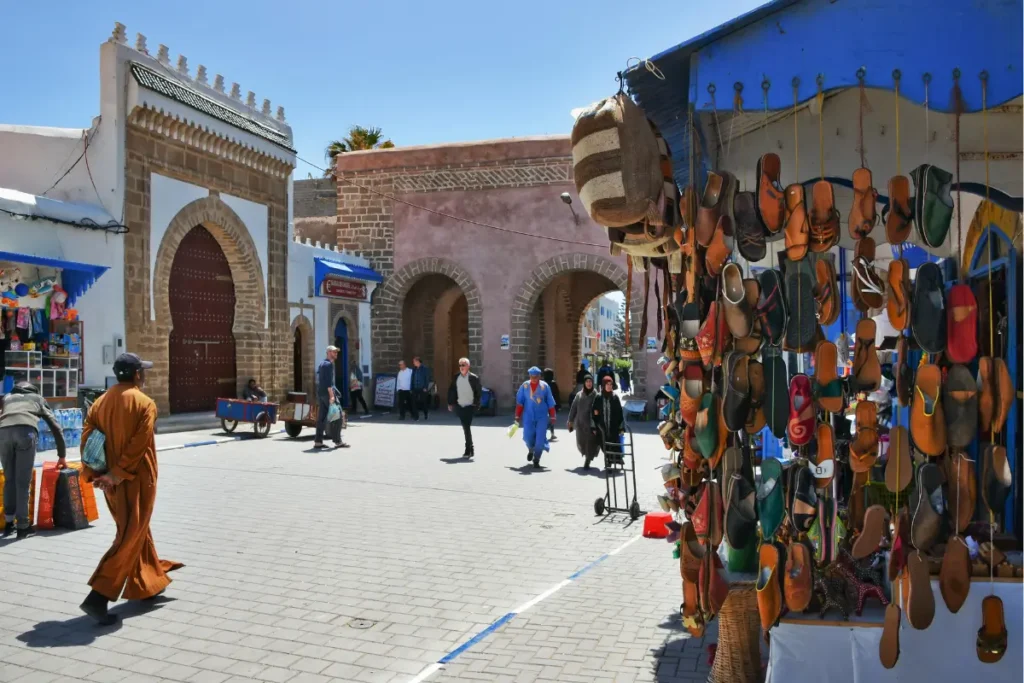
Essaouira’s medina, a UNESCO World Heritage site since 2001, is a masterpiece of fortified architecture and a living testament to its glorious past. It’s smaller and easier to navigate than Marrakech’s, making it a joy to explore on foot.
A. The Skala de la Ville & Skala du Port: Bastions of History
1. Skala de la Ville
Dominating the western ramparts, this impressive sea bastion offers panoramic views of the Atlantic, the Iles Purpuraires, and the city. Cannon-lined battlements, echoes of past defences, provide perfect photo opportunities, especially at sunset. `
2. Skala du Port
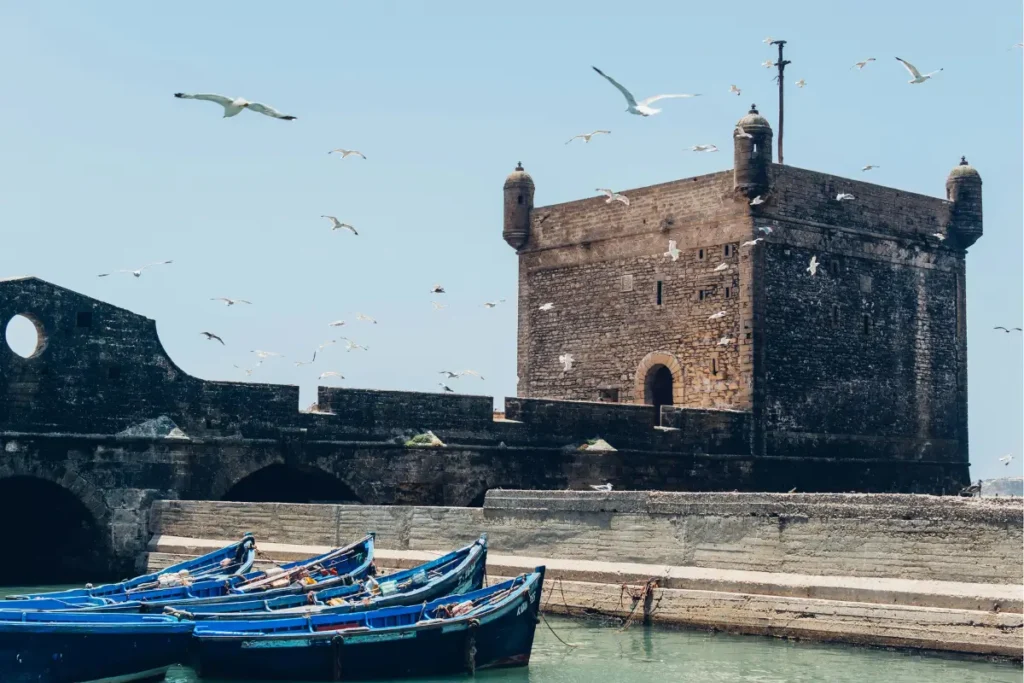
To the south, this smaller bastion guards the bustling port. Climb its ramparts for a vibrant view of blue fishing boats, the active fish market, and the dramatic coastline.
B. The Medina’s Heart: Souks and Alleys
Unlike the labyrinthine souks of Fes, Essaouira’s are more relaxed and less aggressive, making for a pleasant shopping experience.
1. Artisan Souks
Wander through alleys dedicated to different crafts. Essaouira is famous for its intricate thuya wood carving, a fragrant wood native to the Atlas Mountains. Watch artisans at work, crafting boxes, furniture, and decorative items. `
2. Spice Markets
A feast for the senses, vibrant stalls overflow with fragrant spices, argan oil products, traditional remedies, and colourful textiles.
3. Art Galleries
Reflecting its artistic spirit, the medina is dotted with numerous small galleries showcasing local painters, sculptors, and photographers. The art often depicts scenes of Essaouira, Gnawa music, and vibrant Moroccan life.
4. Boutiques
Discover unique clothing, jewellery, leather goods, and ceramics, often with a bohemian or modern Moroccan twist.
C. Gates and Grandeur: Bab Sbaa and Bab Marrakech
The medina is punctuated by several impressive gates (babs). Bab Sbaa (Lion Gate) and Bab Marrakech are notable entry points, each with its own character and leading to different sections of the medina.
D. Mellah: The Old Jewish Quarter
While most of Essaouira’s Jewish population emigrated in the mid-20th century, their legacy remains in the Mellah. Though now largely deserted and in varying states of disrepair, this quarter offers a poignant glimpse into a vital part of Essaouira’s history, with old synagogues and architectural details hinting at its past vibrancy.
III. The Heartbeat of Essaouira: The Port and Beach Life
Beyond the medina walls, Essaouira continues to pulsate with life, particularly at its iconic port and along its vast sandy beach.
A. The Bustling Port: A Symphony of Blue and Red
Essaouira’s port is one of Morocco’s most picturesque and active. Each morning, the vibrant blue fishing boats return, their catch overflowing.
1. Fish Market
Witness the lively auction of fresh seafood – sardines, sole, snapper, octopus, and more. It’s a loud, chaotic, and utterly authentic experience.
2. Fresh Fish Grills
Directly beside the harbour, small stalls will grill your freshly purchased fish on the spot. It’s an unmissable culinary experience – simple, fresh, and incredibly delicious. `
3. Seagulls and Fishermen
The air is thick with the cries of seagulls vying for scraps, and the scene is a photographer’s dream, capturing the enduring rhythm of Essaouira’s maritime life.
B. Essaouira Beach: The Wind City’s Playground
Stretching for miles south of the city, Essaouira’s expansive sandy beach is famous for its consistent winds, earning the city its “Wind City” moniker.
1. Watersports Paradise
This is a world-class destination for kitesurfing and windsurfing. Numerous schools line the beach, offering lessons for all levels. `
2. Camel and Horse Riding
For a more leisurely pace, enjoy a romantic camel ride or a canter on horseback along the shoreline, especially magical at sunset.
3. Strolling and Sunbathing
While the wind can be brisk, the vastness of the beach offers plenty of space for long walks, sunbathing (sheltered), and enjoying the ocean breeze.
4. Sidi Kaouki
A short drive south, this more secluded beach offers even better surf conditions, a laid-back vibe, and charming guesthouses.
IV. Essaouira’s Cultural & Artistic Soul
Essaouira is not just a pretty face; it’s a city with a profound artistic and musical spirit that permeates every alley and plaza.
A. Gnawa Music: The Soul of Essaouira
Essaouira is the spiritual home of Gnawa music, a mesmerizing blend of African, Berber, and Arab rhythms and spirituality, originating from the descendants of sub-Saharan slaves. `
1. Gnawa World Music Festival
Every June, Essaouira hosts this globally renowned festival, drawing thousands to celebrate Gnawa music and its fusions with other world music genres. It’s an electrifying experience of hypnotic rhythms, soulful chants, and vibrant performances.
2. Everyday Encounters
Even outside the festival, you’ll hear the distinctive sound of the guembri (a three-stringed bass lute) and qraqeb (metal castanets) emanating from small shops, cafes, and street corners.
B. Art Galleries and Creative Hubs
The city’s light, its vibrant colours, and its bohemian atmosphere have long attracted artists.
1. Local Artists
Explore galleries showcasing local talents whose work often captures the essence of Essaouira – the sea, the medina, Gnawa musicians, and abstract interpretations of Moroccan culture.
2. Thuya Wood Artisans
Witness the intricate craft of thuya wood carving, a centuries-old tradition passed down through generations. The distinctive knots and grain of this wood make for stunning, unique pieces.
C. Festivals Beyond Gnawa
While the Gnawa Festival is paramount, Essaouira also hosts other cultural events, including classical music festivals and art exhibitions, further cementing its reputation as a cultural epicentre.
V. Culinary Delights: A Taste of Essaouira
Essaouira’s culinary scene is a vibrant reflection of its coastal location and cultural diversity.
A. Seafood Extravaganza
Given its active port, fresh seafood is the undisputed king of Essaouiran cuisine.
1. Port Grills: As mentioned, the simplest and most authentic way to enjoy seafood is to pick your catch directly from the fishermen at the port and have it grilled on the spot. `
2. Restaurant Options: From charming medina eateries to upscale dining, fresh fish tagines, grilled platters, and seafood pastillas are ubiquitous. Don’t miss the local sardines, often served grilled with a squeeze of lemon.
B. Moroccan Classics with an Essaouiran Twist
Beyond seafood, enjoy the full spectrum of Moroccan gastronomy.
- 1. Tagine : The slow-cooked stew, available with chicken, lamb, beef, or vegetables, is a staple.
- 2. Couscous : Traditionally served on Fridays, but available in many restaurants.
- 3. Harira Soup : A hearty and warming traditional Moroccan soup, perfect on a windy evening.
- 4. Mint Tea : The ubiquitous “Moroccan whisky,” served with hospitality and ceremony.
- 5. Argan Oil : Essaouira is in the heart of the Argan region. Sample culinary argan oil (nutty flavour, great with bread) and discover its cosmetic uses. Visit a women’s cooperative to see its production.
C. European and International Flavours
Essaouira’s cosmopolitan past and present mean you’ll also find excellent French, Italian, and other international cuisines, particularly in the more upscale establishments. Many cafes offer delicious breakfasts with fresh juices, pastries, and Moroccan pancakes (Baghrir and M’semmen).
VI. Practical Tips for Your Essaouiran Adventure
To ensure a smooth and enjoyable trip, here are some essential practical tips.
A. Getting There
- 1. From Marrakech : The most common route. Regular, comfortable, and affordable bus services (CTM and Supratours) connect Marrakech to Essaouira (approx. 2.5-3 hours).
- 2. Essaouira-Mogador Airport (ESU) : International flights from some European cities (e.g., London, Paris, Brussels) operate directly to Essaouira.
- 3. From Agadir : Buses also connect Agadir to Essaouira (approx. 3-4 hours).
B. Getting Around
- 1. On Foot: The medina is entirely pedestrian. Walking is the best way to explore its intricate alleys and discover hidden gems.
- 2. Petit Taxis: Blue small taxis operate outside the medina for longer distances within the city or to the beach. Agree on the price before starting the journey or insist on the meter (compteur).
- 3. Bicycles: You can rent bicycles for exploring the promenade and the beach.
C. Accommodation
- 1. Riads and Dars: Traditional Moroccan guesthouses within the medina, offering charming courtyards, rooftop terraces, and a truly authentic experience. `
- 2. Hotels: Options range from budget hostels to boutique hotels and luxury resorts outside the medina.
- 3. Apartments/Villas: Available for longer stays, particularly for families or groups.
D. Best Time to Visit
1. Spring (April-May) and Autumn (September-October)
Pleasant temperatures, less wind, and fewer crowds.
2. Summer (June-August)
Popular, especially for watersports and the Gnawa Festival. The wind keeps temperatures relatively cool compared to inland cities.
3. Winter (November-March)
Cooler, can be rainy, but still generally mild and peaceful. Ideal for cultural exploration without the crowds.
E. Language
- 1. Darija (Moroccan Arabic) and Berber: The local languages.
- 2. French: Widely spoken, especially in tourist areas and by older generations.
- 3. English: Increasingly understood in hotels, restaurants, and shops catering to tourists.
- 4. Key phrases : “Salam Alaikum” (hello), “Shukran” (thank you), “La shukran” (no thank you), “Bhalash” (how much?).
F. Safety and Etiquette
- 1. Safety: Essaouira is generally very safe. Be mindful of your belongings, especially in crowded areas.
- 2. Dress Code: While more liberal than other Moroccan cities due to its coastal and bohemian vibe, modest dress is appreciated, particularly for women, out of respect for local customs.
- 3. Bargaining: Expected in the souks. Negotiate politely and with a smile. It’s part of the experience.
- 4. Photography: Always ask for permission before photographing people. A small tip is often appreciated.
VII. Day Trips & Beyond Essaouira
Essaouira serves as an excellent base for exploring the surrounding region.
A. Argan Tree Cooperatives
Visit one of the many women’s cooperatives in the countryside surrounding Essaouira where argan oil is traditionally extracted. Learn about the process, from the nuts eaten by goats (often humorously exaggerated for tourists) to the laborious hand-pressing, and purchase genuine argan products.
B. Sidi Kaouki
This laid-back coastal village, about 25 km south of Essaouira, is a haven for surfers and those seeking a quieter beach experience. Enjoy longer stretches of sand, beachfront cafes, and a more bohemian atmosphere.
C. Diabat
Just a few kilometers south of Essaouira, this small village is famous for its association with Jimi Hendrix, who allegedly spent time here. It’s a peaceful spot with stables offering horseback riding.
D. Inland Villages and Berber Culture
Explore the rural landscape to gain insight into traditional Berber life, visit local markets, and experience the simpler pace of the Moroccan countryside.
Conclusion: Why Essaouira Captivates the Soul
Essaouira is more than just a destination; it’s an experience. It’s a place where history whispers from ancient walls, where the Atlantic breathes life into every corner, and where diverse cultures coalesce into a unique, vibrant tapestry. Whether you’re drawn by the allure of its UNESCO medina, the thrill of its watersports, the soul-stirring rhythms of Gnawa music, or the simple pleasure of fresh grilled fish by the harbour, Essaouira promises to leave an indelible mark on your heart. It’s a city that invites you to slow down, to breathe in the salty air, and to lose yourself in its timeless charm. Come discover Essaouira, the Atlantic Jewel, and let its winds carry you away.
👉 Learn more about Essaouira, Morocco – The Atlantic Jewel on Visit Morocco
Frequently Asked Questions (FAQ) about Essaouira, Morocco
Here are answers to some of the most common questions travelers have about visiting Essaouira.
Is Essaouira safe for tourists?
Yes, Essaouira is generally considered a very safe city for tourists. The medina is peaceful, and locals are accustomed to visitors. As with any travel destination, it’s wise to be aware of your surroundings, especially at night, and to keep an eye on your belongings in crowded areas like the souks or the port. Solo female travelers often report feeling comfortable and welcome.
What is Essaouira most famous for?
Essaouira is most famous for several key aspects:
– Its UNESCO World Heritage-listed medina with its distinctive blue and white architecture and fortified ramparts. `
– Being the “Wind City” or “Windy City of Africa,” making it a world-class destination for kitesurfing and windsurfing.
– Its vibrant fishing port and delicious fresh seafood.
– Being the spiritual home of Gnawa music and hosting the renowned Gnawa World Music Festival.
– Its relaxed, bohemian atmosphere and historical appeal to artists and musicians (including legends like Jimi Hendrix).
How do I get from Marrakech to Essaouira?
The most popular and convenient ways to get from Marrakech to Essaouira are by bus or shared/private taxi.
Bus: CTM and Supratours are the most reputable companies, offering comfortable, air-conditioned buses. The journey takes approximately 2.5 to 3 hours. It’s advisable to book tickets a day or two in advance, especially during peak season.
Shared Grand Taxi: These can be found near the bus stations and leave when full (usually 6 passengers). They are faster but less comfortable than buses. Agree on the price beforehand.
Private Taxi/Transfer: Offers door-to-door convenience and flexibility, but is the most expensive option.
How many days should I spend in Essaouira?
To fully experience Essaouira, 2 to 3 full days is generally recommended. This allows enough time to explore the medina, visit the port, relax on the beach, try some watersports, enjoy the culinary scene, and soak in the atmosphere without feeling rushed. If you plan to do day trips or spend significant time kitesurfing/windsurfing, you might consider extending your stay to 4-5 days.
What is the best time of year to visit Essaouira?
Spring (April-May) and Autumn (September-October) are often considered the best times, with pleasant temperatures, moderate winds, and fewer crowds.
Summer (June-August) is excellent for watersports enthusiasts due to strong winds. While popular, the coastal breeze keeps it cooler than inland Moroccan cities. The Gnawa World Music Festival usually takes place in June.
Winter (November-March) is milder and quieter, perfect for cultural exploration, though you might encounter some rain.
Can you swim in the ocean in Essaouira?
Yes, you can swim in the ocean in Essaouira, especially during the warmer months. The main beach is long and sandy. However, be aware that the Atlantic water can be quite cool even in summer, and the strong winds can sometimes make the conditions choppy. Many people prefer to engage in watersports like kitesurfing or windsurfing rather than just swimming. There are often designated swimming areas.
Is Essaouira expensive?
Compared to many Western European cities, Essaouira is quite affordable. Accommodation, food (especially fresh seafood from the port), and local transport are reasonably priced. Your budget will depend on your choices, but it’s possible to have a fantastic trip without spending a fortune. Bargaining is common in the souks, so you can often get good deals on souvenirs.
What kind of clothes should I pack for Essaouira?
Due to its coastal location and often breezy conditions, layer packing is key.
Warm weather: Light, breathable clothing (cotton, linen) for daytime.
Cooler evenings/winter: Sweaters, jackets, or scarves are essential, as temperatures can drop, and the wind chill can make it feel colder.
Modesty: While Essaouira is relatively relaxed, it’s still a Muslim country. Modest dress (shoulders and knees covered) is appreciated, especially when exploring the medina or religious sites.
Comfortable shoes: For walking the medina’s cobblestone streets.
Swimwear: If you plan to hit the beach or stay in a Riad with a pool.
Sun protection: Sunscreen, sunglasses, and a hat are always recommended.
What’s the difference between a Riad and a Dar in Essaouira?
Both Riads and Dars are traditional Moroccan guesthouses found within the medina, offering authentic experiences.
A Riad (meaning “garden”) typically features an interior garden or courtyard, often open to the sky, and is usually larger with more rooms.
A Dar (meaning “house”) is generally smaller than a Riad, often has a central courtyard but without the garden, and might have fewer rooms.
Both offer unique charm, rooftop terraces, and personalized service, providing a glimpse into traditional Moroccan living. `
Can I find vegetarian or vegan food in Essaouira?
Yes, finding vegetarian food in Essaouira is relatively easy, and vegan options are also available.
Vegetarian: Vegetable tagines, couscous (ensure it’s not cooked with meat broth), fresh salads, lentil soup (harira, check for meat), and omelets are common.
Vegan: Focus on vegetable tagines (specify no butter/dairy), salads, bread, olives, and fresh fruit. Many street food stalls offer vegetarian options.