Marrakech, Where Ancient Soul Meets Modern Spark
Few cities on Earth stir the senses like Marrakech, Morocco. From the rhythmic beats echoing across Jemaa el-Fna Square to the scent of orange blossom drifting through centuries-old riads, Marrakech is a vibrant blend of chaos and charm. Known as Al Hamra — “the Red City” — its terracotta walls, lively souks, and mosaic-filled palaces paint a portrait of Morocco’s timeless beauty.
In this 2025 Marrakech travel guide, you’ll uncover everything from iconic landmarks and culinary treasures to hidden gems, cultural insights, and practical travel tips — designed to help you experience the city like a local, not a tourist.
1. Why Visit Marrakech (and When to Go)
A Timeless Destination for Every Traveler
Marrakech is where tradition meets transformation. Founded in the 11th century by the Almoravid dynasty, the city still carries the heartbeat of its history — yet it continues to evolve, welcoming design lovers, digital nomads, and curious travelers from around the globe.
Best Time to Visit
- Spring (March–May): Perfect weather, blooming gardens, and pleasant evenings.
- Autumn (September–November): Warm, golden light and fewer crowds.
- Summer (June–August): Very hot (up to 40 °C/104 °F), but great for budget travelers.
- Winter (December–February): Mild days, cool nights, and ideal for exploring without heat fatigue.
2. Getting There and Around
Arrival by Air
Marrakech Menara International Airport (RAK) is just 15 minutes from the city center and connects to major European and African hubs. Taxis are available outside, but always agree on a price before departure (usually 100–150 MAD to the medina).
Transportation Inside the City
- Walking: The best way to explore the old medina — though expect a maze of alleys and bustling energy.
- Petit Taxis: Ideal for short trips. Make sure the meter is running, or set a price in advance.
- Caleche Rides: Horse-drawn carriages for scenic routes (best around sunset).
- Buses & Tours: City sightseeing buses and organized excursions offer easy access to attractions outside the medina.
3. Where to Stay in Marrakech
Marrakech’s accommodations reflect its dual identity — half ancient charm, half modern comfort.
Stay in the Medina (Old City)
If you crave authenticity, book a riad — a traditional Moroccan house centered around a courtyard. Riads are hidden gems where you’ll find intricate tilework, lush gardens, and rooftop terraces overlooking the minarets.
Top Picks: Riad Yasmine, La Sultana, Riad Les Ammonites.
Stay in Gueliz (Modern City)
For cosmopolitan comfort, the Gueliz district offers boutiques, galleries, and cafés. It’s quieter and perfect for digital nomads or long stays.
Recommended: Radisson Blu Marrakech, 2Ciels Boutique Hotel.
Luxury Escapes
The Palmeraie area north of the city offers resort-style luxury amid palm groves and desert tranquility.
Try: Mandarin Oriental, Royal Mansour, or Palais Namaskar.
4. Top Things to See and Do in Marrakech
4.1 Iconic Landmarks
Jemaa el-Fna Square:
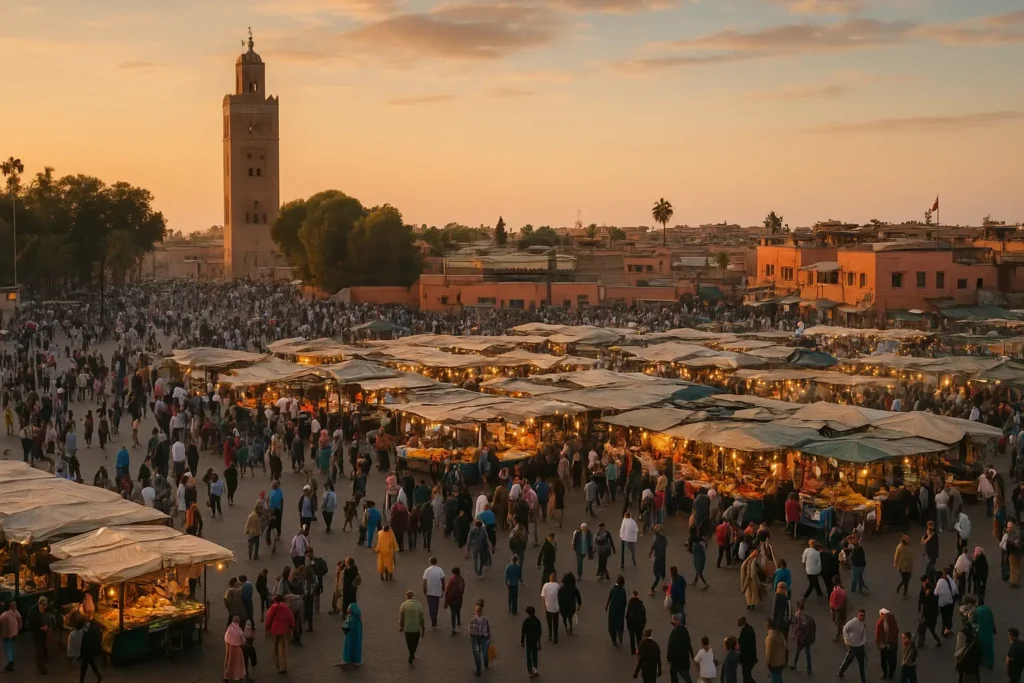
The city’s beating heart. By day, it’s full of juice vendors and snake charmers; by night, it transforms into a sizzling open-air food market filled with music, laughter, and storytelling. Don’t miss the rooftop cafés for panoramic views.
Koutoubia Mosque:
Visible from almost anywhere in the city, its 77-meter minaret is a masterpiece of Almohad architecture. Non-Muslim visitors can’t enter, but the gardens around it are peaceful and photogenic.
Bahia Palace:
An architectural jewel showcasing intricate mosaics, carved cedar ceilings, and tranquil courtyards — a window into 19th-century Moroccan artistry.
Ben Youssef Madrasa:
Recently restored, this former Quranic school features mesmerizing zellij tiles and ornate plasterwork — a photographer’s paradise.
Jardin Majorelle:
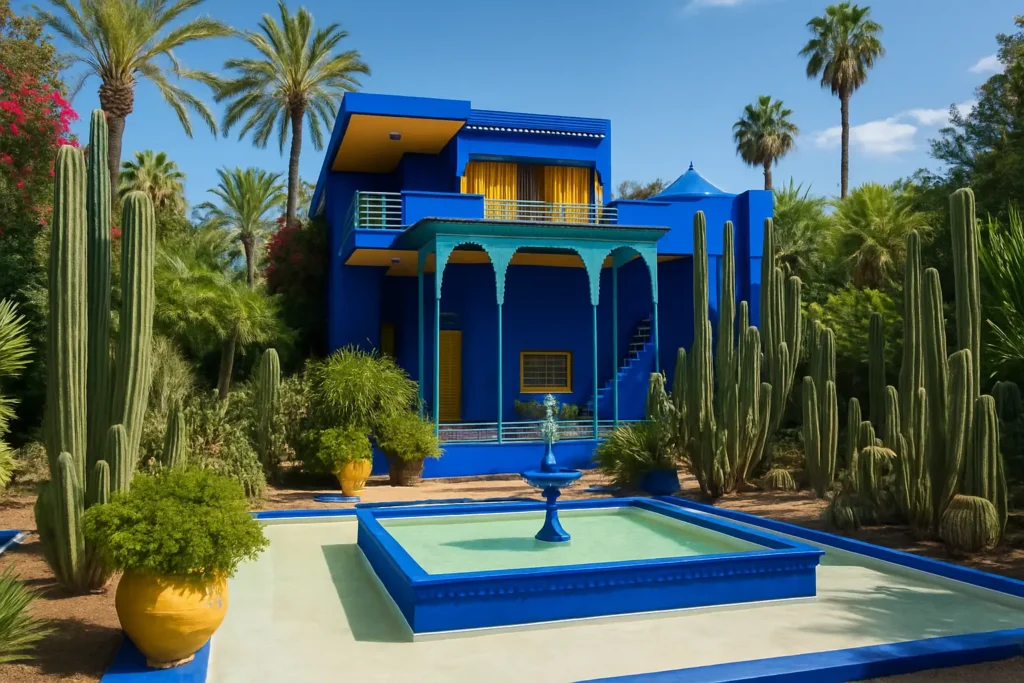
Created by French painter Jacques Majorelle and later owned by Yves Saint Laurent, this cobalt-blue garden oasis offers vibrant contrasts against the desert hues of the city.
4.2 Cultural Experiences and Activities
Explore the Souks:
The souks (markets) are the soul of Marrakech — a labyrinth of color and sound selling everything from handwoven rugs and brass lanterns to spices and leather goods. Don’t be afraid to bargain; it’s part of the experience.
Relax in a Hammam:
The Moroccan bathhouse ritual is both cleansing and cultural. For a luxury experience, try Les Bains de Marrakech; for authenticity, opt for a local hammam in the medina.
Join a Cooking Class:
Learn to make tagine or couscous in a riad kitchen. You’ll not only master recipes but also understand the communal spirit of Moroccan dining.
Admire the Street Art & Design Scene:
The Sidi Ghanem design district is a creative hub filled with artisan studios, modern galleries, and concept stores blending Moroccan heritage with contemporary art.
4.3 Hidden Gems
Le Jardin Secret:
A peaceful sanctuary amid the medina — with Islamic gardens, restored architecture, and a small museum.
Photography Museum of Marrakech:
Showcasing vintage images that reveal Morocco’s evolution through the 19th and 20th centuries.
Bab Agnaou Gate:
One of the original gates of the medina, this 12th-century structure still stands as a symbol of royal power and craftsmanship.
Dar Si Said Museum:
A lesser-known gem filled with Moroccan art, carpets, jewelry, and woodworking from across the country.
5. Food and Drink: A Feast for the Senses
Marrakech is a food lover’s paradise. From street stalls to fine dining, every bite tells a story.
Street Food & Markets
At Jemaa el-Fna, try grilled merguez sausages, snail soup, kebabs, and fresh orange juice. Don’t skip bissara, a hearty fava bean soup served at breakfast.
Traditional Dishes to Try
- Tagine: Slow-cooked stew (often lamb, chicken, or vegetable) with aromatic spices.
- Couscous: Morocco’s national dish, often served on Fridays with meat and vegetables.
- Pastilla: Sweet-savory pie with pigeon, almonds, and cinnamon dusting.
- Harira: A lentil and tomato soup often eaten during Ramadan.
- Mint Tea: The national symbol of hospitality — sweet, fragrant, and poured theatrically from a height.
Where to Eat
- Nomad: Modern Moroccan with rooftop views.
- Le Jardin: Stylish, green-filled courtyard restaurant.
- Al Fassia: Run entirely by women, famous for home-style Moroccan dishes.
- Comptoir Darna: For dinner and live music — where culture meets nightlife.
6. Local Culture, Shopping, and Etiquette
Language
Arabic and French are widely spoken; English is common in tourist areas. A few Arabic phrases — shukran (thank you) or salaam alaikum (hello) — go a long way.
Dress and Behavior
Marrakech is liberal by Moroccan standards but still modest. Avoid overly revealing clothing, especially in the medina or religious sites.
Shopping Tips
- Bargain respectfully — start at half the asking price and negotiate with a smile.
- Always carry cash (dirhams), as many souk vendors don’t take cards.
- Buy directly from artisans when possible — it supports the local economy.
Cultural Etiquette
- Ask before taking photos of people.
- Friday is the holy day — some shops may close midday.
- Show respect during Ramadan by avoiding public eating or drinking during daylight.
7. Day Trips and Excursions
Marrakech makes an ideal base for exploring Morocco’s diverse landscapes.
Atlas Mountains & Ourika Valley
Just an hour away, you’ll find mountain villages, waterfalls, and cool breezes — perfect for hiking or lunch by the river.
Agafay Desert
Closer than the Sahara yet equally magical, Agafay offers luxury camps, camel rides, and star-filled skies.
Essaouira
A charming coastal town 2.5 hours away, known for seafood, windsurfing, and blue-and-white medina streets.
Ait Benhaddou
A UNESCO-listed ksar (fortified village) famous for film locations like Gladiator and Game of Thrones.
8. Sample Itineraries
1-Day in Marrakech
Morning: Visit Koutoubia Mosque & Bahia Palace.
Afternoon: Wander the souks, lunch at Nomad.
Evening: Sunset at Jemaa el-Fna, dinner at a food stall.
3-Day Plan
Day 1: Medina landmarks + Jardin Majorelle.
Day 2: Cooking class + hammam + rooftop dinner.
Day 3: Day trip to the Atlas Mountains.
5-Day Plan
Combine the above with an Agafay desert overnight stay or a visit to Essaouira.
9. Budget and Money Matters
Currency
Moroccan Dirham (MAD). ATMs are plentiful in the new city but limited in the medina.
Average Daily Budget
- Budget travelers: 500–700 MAD/day ($50–70)
- Mid-range: 900–1,500 MAD/day ($90–150)
- Luxury: 2,000+ MAD/day ($200+)
Tips
- Tipping (5–10%) is appreciated.
- Exchange money at banks or official counters — avoid street exchangers.
- Always keep small bills for taxis and markets.
10. Safety, Health, and Practical Tips
Marrakech is generally safe, but like any major city, awareness matters.
Safety
- Beware of overly helpful “guides” offering unsolicited tours.
- Keep valuables secure; use cross-body bags in crowded areas.
- Avoid photographing police or government buildings.
Health
- Tap water isn’t recommended — stick to bottled water.
- Use sunscreen and stay hydrated, especially in summer.
- Travel insurance is essential.
Connectivity
Wi-Fi is common in hotels and cafés. Consider buying a local SIM card (Maroc Telecom, Orange, or Inwi).
11. Hidden Gems and Authentic Experiences
Attend a Gnawa Music Performance
Experience Morocco’s soul through Gnawa rhythms — a mix of African, Berber, and Arabic influences. Try intimate venues in the medina.
Visit Local Artisan Workshops
Learn how pottery, carpets, or metal lanterns are made in small family workshops — great for genuine souvenirs.
Discover Marrakech by Night
The city transforms after dark — lantern-lit alleys, street musicians, and rooftop lounges create an unforgettable atmosphere.
Stay in a Desert Camp
For a luxury adventure, spend a night under the stars in the Agafay Desert — only 45 minutes away.
12. Marrakech for Every Traveler
For Couples
Rooftop dinners, riad spas, and romantic desert stays.
For Families
Gardens, camel rides, and safe guided tours of the medina.
For Solo Travelers
Friendly hostels, café culture, and plenty of opportunities to join group excursions.
For Luxury Seekers
Exclusive riads, hammams, and fine dining amid Moorish opulence.
Conclusion: Let Marrakech Work Its Magic
Marrakech is not just a destination — it’s an emotion. It’s the echo of call-to-prayer across the rooftops, the sparkle of lanterns in the night market, and the aroma of mint tea shared with new friends.
Whether you’re wandering through historic palaces, savoring a tagine beneath palm-tree shadows, or losing yourself in the medina’s rhythm, the Marrakech experience stays with you long after you’ve left.
Plan your journey, embrace the chaos, and let the Red City awaken your senses.
FAQ — Marrakech, Morocco Travel Guide 2025
What is the best time to visit Marrakech, Morocco?
The best time to visit Marrakech is from March to May and September to November, when the weather is warm but comfortable. Spring and autumn offer ideal conditions for sightseeing, outdoor dining, and day trips to the Atlas Mountains.
How many days should I spend in Marrakech?
A 3- to 5-day stay is perfect to explore Marrakech’s highlights — including the souks, palaces, Jardin Majorelle, and nearby attractions like the Agafay Desert or Ourika Valley.
Is Marrakech safe for tourists in 2025?
Yes, Marrakech is generally safe, especially in tourist areas. Like any major city, stay alert in crowded places, avoid unlicensed guides, and keep valuables secure. Locals are friendly and welcoming to visitors.
What are the must-see attractions in Marrakech?
Top attractions include Jemaa el-Fna Square, Bahia Palace, Koutoubia Mosque, Ben Youssef Madrasa, and Jardin Majorelle. Don’t miss the colorful souks for an authentic Moroccan shopping experience.
What food should I try in Marrakech?
Try Moroccan classics like tagine, couscous, pastilla, harira soup, and mint tea. Street food at Jemaa el-Fna offers incredible flavors — from grilled meats to fresh orange juice and sweet pastries.
Where should I stay in Marrakech?
For a traditional experience, stay in a riad within the medina. For modern comforts, choose Gueliz, or enjoy luxury in the Palmeraie resort area. Options range from budget hostels to world-class hotels like Royal Mansour and La Sultana.
Can I visit the Sahara Desert from Marrakech?
Yes! You can book 2- or 3-day tours to the Sahara Desert, visiting Ait Benhaddou and Merzouga dunes along the way. For a shorter trip, the Agafay Desert (only 45 minutes away) offers a similar experience with luxury desert camps.
What language is spoken in Marrakech?
Arabic, English and French are the main languages, but English is widely spoken in hotels, restaurants, and tourist areas. Learning a few Arabic phrases — like salaam alaikum (hello) — is always appreciated.
What should I wear in Marrakech?
Dress modestly but comfortably. Lightweight clothing that covers shoulders and knees is recommended, especially in religious or rural areas. In summer, wear breathable fabrics and carry a hat and sunscreen.
How do I get around Marrakech?
You can walk through the medina, use petit taxis for short rides, or take horse-drawn caleches for scenic tours. For longer trips, consider booking a driver or guided excursion.
Is Marrakech expensive for travelers?
Marrakech suits all budgets. Street food and riad stays are affordable, while luxury travelers can indulge in fine dining and five-star resorts. Expect to spend $50–$150 per day depending on your travel style.
What are the best day trips from Marrakech?
Popular day trips include the Atlas Mountains, Ourika Valley, Agafay Desert, and Essaouira. Each offers a unique glimpse into Morocco’s diverse landscapes and culture.
Can I use credit cards in Marrakech?
Credit cards are accepted in most hotels, restaurants, and larger shops, but cash (dirhams) is still preferred in souks and local markets. ATMs are widely available in Gueliz and near Jemaa el-Fna.
What is the tipping culture in Marrakech?
Tipping is customary in Morocco. Leave around 5–10% in restaurants, and tip small amounts (5–10 MAD) to porters, guides, and taxi drivers for good service.
Why is Marrakech called “The Red City”?
Marrakech earned its nickname from the red clay used to build its city walls and buildings. At sunset, the entire medina glows in shades of gold and crimson — a truly magical sight.