2030 World Cup preparations in Morocco is a challenge! As Morocco gears up to co-host the FIFA World Cup in 2030 alongside Spain and Portugal, the country isn’t just preparing for a month of world-class football—it’s preparing for a transformative national moment. Billions are being poured into infrastructure, transport, tourism, and technology as Morocco positions itself as a modern, connected, and globally influential nation. As part of its 2030 World Cup preparations, Morocco is investing heavily in sports development, building state-of-the-art stadiums, enhancing local training facilities, and boosting its footballing culture to ensure the event leaves a lasting legacy.
For a country with a rich footballing history and a strategic geographic position bridging Africa and Europe, the 2030 World Cup is more than a tournament—it’s a declaration of intent.
Let’s discover the preparations for the 2030 World Cup in Morocco.
Table of Contents
A Game Plan That Goes Beyond the Pitch
Stadiums That Speak of Ambition
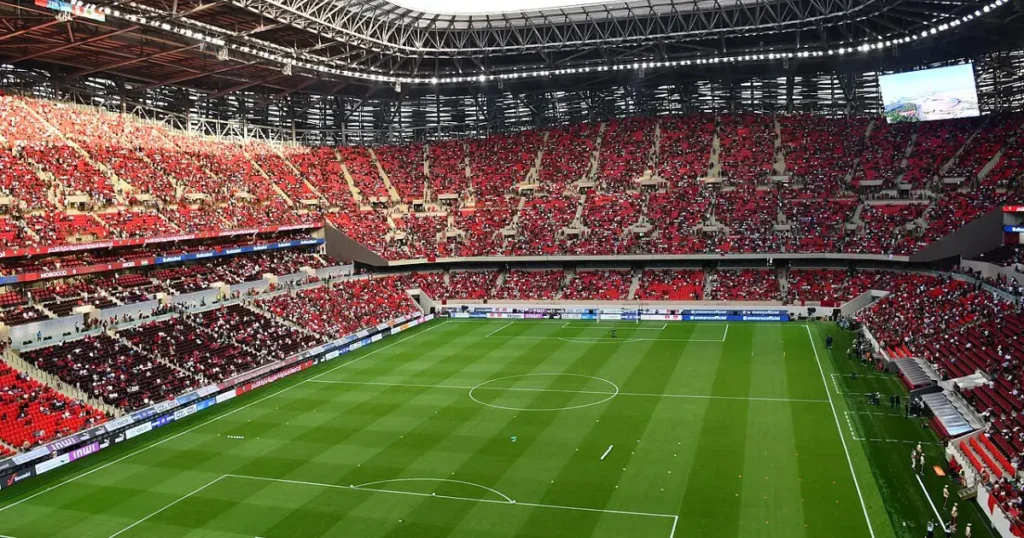
At the heart of Morocco’s World Cup vision are its stadiums—modern, massive, and strategically located. The crown jewel is the Grand Stade Hassan II, under construction in Benslimane, just outside Casablanca. With an estimated capacity of 115,000, it’s expected to be one of the largest football venues on the planet.
Other key cities—Tangier, Rabat, Fez, Marrakech, and Agadir—are seeing significant upgrades to existing stadiums, bringing them in line with FIFA’s elite standards. These investments are designed not just for a single event but to create legacy venues for generations to come.
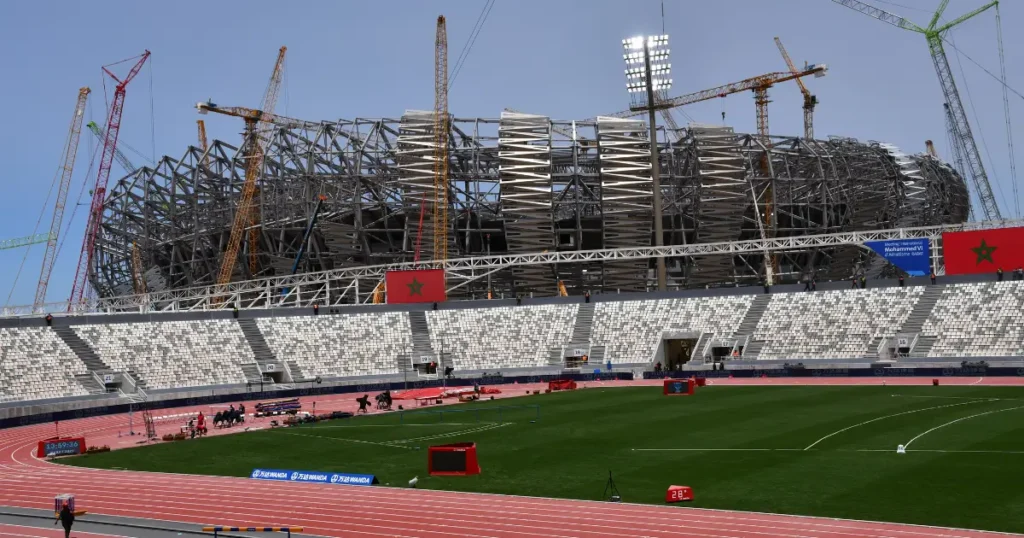
“We are building not just for 2030, but for the next 30 years,” said Morocco’s Minister of National Planning in a recent statement.
Rail, Roads, and Runways: Building a Connected Morocco
The tournament is fast-tracking transport projects that have long sat in planning stages. Morocco’s high-speed rail ambitions, already realized with the successful Al Boraq line connecting Tangier to Casablanca, are expanding further south.
A $10 Billion Rail Expansion Plan
A new high-speed rail line is in the works to link Kenitra, Rabat, Casablanca, and Marrakech—reducing journey times drastically and allowing football fans to crisscross the country in hours, not days. The total investment? A staggering 96 billion dirhams (~$9.5 billion USD). Meanwhile, highways and interchanges are being reengineered to handle tournament-level traffic, and a new push to double airport capacity by 2030 is already underway. From Casablanca to Marrakech, airports are being modernized to accommodate an expected influx of millions.
The Economic Scoreboard: What Morocco Stands to Gain
According to Morocco’s Economy Minister Nadia Fettah, co-hosting the tournament is expected to generate over 100,000 jobs annually, particularly in construction, tourism, and public services. Independent economic studies suggest the event could inject $850 million to $1.2 billion into the Moroccan economy.
But the World Cup is also expected to be a catalyst for longer-term economic reform:
- Tourism: Morocco welcomed over 13 million tourists in 2023. With new rail, road, and hotel capacity in place, that number could climb much higher in the lead-up to and aftermath of the World Cup.
- Real Estate: Casablanca, Marrakech, and Rabat are already seeing surging demand for property. Hospitality developers are racing to build new hotels, short-term rentals, and mixed-use complexes.
- Foreign Investment: Morocco’s revised investment charter is attracting international partners across sectors—from infrastructure and energy to digital services.
More Than a Game: A Social and Cultural Inflection Point
The 2030 World Cup also has deep symbolic meaning for Morocco. It’s the first time the tournament will be co-hosted across two continents, and Morocco is poised to serve as the bridge.
A Platform for Youth and National Identity
Football is more than sport in Morocco—it’s part of the national soul. By hosting one of the world’s most-watched events, Morocco not only celebrates its past achievements, such as the Atlas Lions’ historic 2022 World Cup run, but also lays the groundwork for its next generation of talent.
Grassroots sports funding, youth academies, and inclusive access to sporting facilities are all part of the broader 2030 strategy.
Can Morocco Meet the Moment?
Big Dreams, Big Challenges
Of course, mega-events bring mega challenges:
- Budget Overruns: Stadium and transport megaprojects often face delays and spiraling costs. Ensuring that budgets stay on track is essential.
- Sustainability: From water usage to energy consumption, Morocco must ensure its World Cup leaves a green legacy—not a carbon footprint.
- Post-Event Utilization: One of the risks of such massive investment is ending up with “white elephants”—unused venues that sit idle after the tournament.
But the Blueprint Is There
Morocco has the experience: it’s hosted AFCON tournaments, bid for multiple World Cups in the past, and has already integrated FIFA-compliant infrastructure in key cities. The difference now is scale—and global scrutiny.
“We’re not just hosting a tournament,” said one official at the Ministry of Infrastructure. “We’re redesigning the nation.”
What Success Looks Like
By 2030, Morocco aims to have:
- A fully functional high-speed rail network connecting the north to the south
- 80 million annual airport passengers (up from 38 million today)
- Stadiums that rival the best in the world
- Smart, sustainable cities capable of hosting millions of visitors
- A globally respected sporting and tourism brand
Final Whistle: More Than Just Football
Morocco’s preparations for the 2030 FIFA World Cup are ambitious, but they reflect a country that sees sport not just as entertainment, but as infrastructure, identity, and opportunity. The next five years will be pivotal. If Morocco delivers, it won’t just be remembered for hosting the World Cup. It will be remembered for redefining what it means to host it.
2030 World Cup Preparations in Morocco – FAQ
The 2030 FIFA World Cup will be a historic event as it marks the 100th anniversary of the tournament. For the first time in history, the tournament will be hosted across three continents: Africa, Europe, and South America. Morocco is part of a joint bid with Spain and Portugal to host the event. Here’s a frequently asked questions (FAQ) list regarding Morocco’s role in the 2030 World Cup preparations:
Why was Morocco chosen as part of the 2030 World Cup bid?
Morocco is one of the leading football nations in Africa and has shown great potential in its past World Cup campaigns. The country has invested heavily in its sports infrastructure, including modern stadiums and training facilities. Its proximity to Europe and its growing reputation as a hub for international tourism and trade also made it an attractive choice.
What cities in Morocco will host the World Cup matches?
While the final list of host cities is yet to be confirmed, several cities in Morocco are expected to be involved in the tournament. Some of the key cities being considered include:
Casablanca (Mohammed V Stadium)
Rabat (Prince Moulay Abdellah Stadium)
Marrakech (Marrakech Stadium)
Tangier (Ibn Batouta Stadium)
Agadir (Ahmed Ben Bella Stadium)
Fes (Complexe Sportif de Fès)What are the key infrastructure projects for the 2030 World Cup?
Morocco has been upgrading its infrastructure in anticipation of the 2030 World Cup, including:
– Stadiums: Several existing stadiums are being renovated, while new ones are being built.
– Transportation: Major improvements are underway for airports, roads, and rail networks to ensure seamless travel for fans and teams.
– Accommodation: New hotels and lodging facilities are being constructed to accommodate the large influx of visitors.
– Technology: Smart city initiatives, including enhanced Wi-Fi, digital signage, and smart ticketing, are being integrated into major cities.How is Morocco preparing for the environmental impact of the World Cup?
Morocco is focusing on sustainability initiatives in line with FIFA’s commitment to organizing a “green” World Cup:
– Eco-friendly stadiums: Efforts are being made to ensure stadiums are energy-efficient, use sustainable materials, and minimize waste.
– Public transportation: Morocco is promoting the use of electric buses and trains to reduce carbon emissions.
– Waste management: There are plans to implement waste reduction programs, including recycling and composting at venues.What role will Morocco play in the 2030 World Cup across continents?
As part of the joint bid, Morocco will host a portion of the matches in North Africa, while Spain and Portugal will host the majority of the European matches. The 2030 World Cup will mark the first time that the tournament spans three continents, highlighting the global nature of the sport.
How does Morocco’s economy benefit from the World Cup?
Hosting the World Cup will bring significant economic benefits, including:
– Tourism: Increased global attention will boost Morocco’s tourism sector, leading to greater revenue from visitors.
– Jobs: New infrastructure projects will create employment opportunities for locals, both during the preparation phase and the event itself.
– Investment: International companies will likely invest in Morocco, particularly in areas like hospitality, construction, and technology.Will Morocco have a team in the 2030 World Cup?
Morocco’s national team, known as the Atlas Lions, will likely qualify for the 2030 World Cup if they perform well in the qualification stages. The team has a strong footballing tradition and has had success in recent years, including making it to the semifinals in the 2022 FIFA World Cup.
How can fans from Morocco and abroad purchase tickets?
Ticket sales for the 2030 World Cup will likely follow FIFA’s standard procedures:
– Tickets will be available through FIFA’s official website and authorized sellers.
– Different categories of tickets will be offered, including options for match days, team-specific passes, and all-inclusive packages.
– Morocco will have a special allocation of tickets available for its citizens and residents.How will Morocco ensure security for the World Cup?
Security will be a priority for Morocco, as it will be for all host countries. The Moroccan government, in collaboration with FIFA and international law enforcement, will implement stringent security measures:
– Stadium security: Enhanced screenings, surveillance systems, and security personnel will be stationed at all venues.
– Fan zones: Safe and secure fan zones will be set up for public viewing of matches.
– Crowd management: Authorities will use advanced crowd control measures and coordinate with local police to ensure a smooth flow of people.How will Morocco promote local culture during the World Cup?
Morocco is known for its rich cultural heritage, and during the 2030 World Cup, there will be many opportunities to showcase traditional arts, cuisine, and music:
– Cultural events: Concerts, art exhibitions, and performances will be held in conjunction with the tournament.
– Cuisine: Moroccan food will be promoted in stadiums and fan zones, offering international visitors a taste of the country’s famous dishes like couscous, tagine, and pastilla.
– Local heritage: The tournament will highlight the beauty of Moroccan architecture, ancient cities, and historical landmarks.What legacy will the 2030 World Cup leave for Morocco?
The 2030 World Cup is expected to leave a lasting legacy in Morocco:
– Sports culture: Increased interest in football will inspire young players, and the tournament will likely lead to further investment in local football infrastructure.
– Global reputation: Hosting the World Cup will elevate Morocco’s standing on the global stage and enhance its image as a destination for tourism, business, and international cooperation.
– Infrastructure: The improved transportation, stadiums, and other facilities will serve the country for years to come.