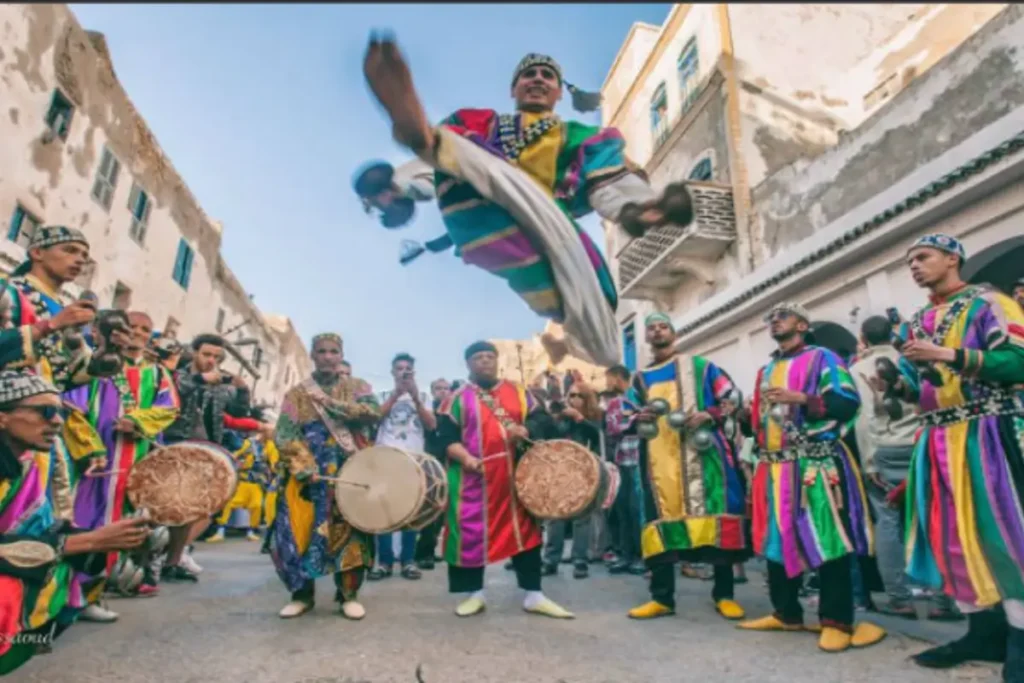
From the Atlantic coast to the Sahara dunes, Morocco vibrates with sound — the steady rhythm of drums, the poetic call of flutes, and the soulful chants that rise from ancient medinas. Music and dance are woven into every corner of Moroccan life. They tell stories of love, faith, freedom, and identity, passed down through generations.
This is not just entertainment; it’s the heartbeat of a nation. Whether performed in sacred rituals or festive celebrations, Moroccan music connects people to their roots and to one another. Let’s dive into the country’s most iconic sounds, dances, and instruments — and discover how tradition meets modern creativity.
Table of Contents
1. Gnawa: The Spirit of Africa in Moroccan Sound
Among Morocco’s most recognizable and mystical musical traditions is Gnawa, a style with deep African and Sufi roots. Originating from sub-Saharan slaves who settled in Morocco centuries ago, Gnawa music blends spiritual chants, hypnotic rhythms, and trance ceremonies to heal the soul and honor ancestors.
Instruments and Rituals
The main instrument is the guembri — a three-stringed bass lute made from camel skin and wood. Its deep tone guides the rhythm, while krakebs (metal castanets) provide sharp percussion. Performances often include repetitive chanting, symbolizing prayer and meditation.
Gnawa isn’t only about music; it’s about spiritual connection. During the traditional lila ceremony, musicians play all night to invoke healing and spiritual cleansing.
Where to Experience It
- Essaouira Gnawa and World Music Festival – an international event uniting Gnawa masters and global jazz or reggae artists.
- Marrakech and Fes medinas – smaller, intimate performances where visitors can feel the authentic trance atmosphere.
Gnawa embodies resilience, faith, and African heritage, making it a living testimony to Morocco’s multicultural identity.
2. Andalusian Music: The Poetry of the Past
In contrast to the earthy sound of Gnawa, Andalusian music is refined, elegant, and intellectual. It dates back to Al-Andalus (Muslim Spain, 9th–15th centuries) and was brought to North Africa by exiled musicians and scholars.
Structure and Meaning
The genre is organized into noubas — musical suites based on rhythm and mood. Each nouba lasts nearly an hour, flowing through movements that evoke emotion and contemplation. The lyrics, often in Classical Arabic, celebrate divine beauty, love, and philosophy.
Instruments and Venues
Andalusian orchestras feature:
- Oud – pear-shaped lute symbolizing harmony and refinement.
- Rebab – a bowed string instrument adding a melancholic tone.
- Tar – frame drum used to maintain rhythm.
Cities like Fes, Tetouan, and Rabat are renowned for preserving this tradition through conservatories and festivals such as the Fes Festival of Sacred Music.
Cultural Significance
Andalusian music represents Morocco’s intellectual heritage, bridging Arab, Jewish, and Mediterranean influences. It is often performed during religious holidays, cultural festivals, and royal events, symbolizing dignity and cultural continuity.
3. Chaabi: The Voice of the Streets
If you’ve walked through a Moroccan market or attended a wedding, you’ve likely heard Chaabi — the people’s music. Its name literally means “popular,” and its rhythms are full of joy, humor, and storytelling.
Everyday Energy
Chaabi lyrics speak about love, friendship, and daily life, often with witty or satirical undertones. Musicians improvise lyrics to engage the crowd, making every performance unique.
Chaabi blends traditional melodies with modern instruments such as keyboards, violins, and electric guitars. The percussion section—featuring bendirs and darbukas—keeps everyone clapping and dancing.
Where to Hear It
- Casablanca – at weddings, cafés, and night markets.
- Meknes and Marrakech – local bands perform during public celebrations and festivals.
Chaabi’s accessibility makes it a unifying force; it transcends class and background, bringing Moroccans together in laughter and rhythm.
4. Amazigh (Berber) Folk Music: The Sound of the Mountains
In Morocco’s Atlas Mountains and southern villages, music remains the voice of community. Amazigh (Berber) songs celebrate nature, family, and resistance, passed down through oral tradition.
Regional Variations
- Ahidous (Middle Atlas): Men and women form circles, clapping and singing in harmony, accompanied by the bendir drum.
- Ahwach (High Atlas and Souss): A dramatic performance with poetry, drumming, and dance — often lasting until sunrise.
- Rrways (Sous region): Traveling poets who perform with lutes and tambourines, preserving Amazigh oral literature.
Instruments and Symbolism
Common instruments include:
- Bendir – a large frame drum, symbolizing unity and rhythm of life.
- Rebab – used to echo the singer’s emotions.
- Taslilit (flute) – imitating the sounds of wind and mountain streams.
Amazigh folk music and dance reflect collective identity and social harmony, turning festivals and weddings into powerful communal rituals.
5. Moroccan Dance: The Body in Motion
Moroccan dance styles are as diverse as its musical genres. Each region has its own movement vocabulary and symbolic gestures.
Amazigh Dances
- Ahidous and Ahwach – combine rhythmic steps, synchronized clapping, and poetry. Dancers wear colorful costumes that emphasize movement and group coordination.
- Guedra (Sahara): Performed by women to express spiritual energy and blessing. Dancers wear veils and communicate through hand gestures that represent peace and power.
Urban and Modern Dance
In cities like Casablanca and Rabat, traditional dance meets hip-hop, contemporary, and fusion choreography. Dance schools and cultural centers encourage young Moroccans to explore identity through motion.
Dance in Morocco, traditional or modern, remains a language of emotion, community, and celebration.
6. Traditional Instruments of Morocco
Morocco’s soundscape is defined by a rich array of handmade instruments, each carrying centuries of history and craftsmanship.
| Instrument | Type | Used In | Cultural Meaning |
|---|---|---|---|
| Guembri | String | Gnawa | Symbol of African ancestry and healing power |
| Oud | String | Andalusian, Classical | Symbol of refinement and spirituality |
| Rebab | Bowed String | Amazigh, Andalusian | Expresses emotion and nostalgia |
| Bendir | Percussion | Amazigh, Chaabi | Represents the heartbeat of community |
| Krakebs | Percussion | Gnawa | Metallic rhythm evoking spiritual trance |
| Darbuka | Percussion | Chaabi, Fusion | Adds energy to festive songs |
| Nay (Flute) | Wind | Andalusian, Folk | Symbolizes love, nature, and longing |
Each instrument tells a story — not only of melody, but of identity, migration, and faith. Moroccan artisans continue to craft these instruments by hand, keeping the musical heritage alive.
7. Festivals and Celebrations
Moroccan festivals are sensory experiences where music and dance bring entire communities together.
Famous Music Festivals
- Fes Festival of Sacred Music – gathers artists from around the world to perform spiritual and classical music in Fes’s ancient medina.
- Essaouira Gnawa and World Music Festival – celebrates cross-cultural collaboration between Gnawa musicians and international performers.
- Mawazine (Rabat) – one of Africa’s largest festivals, mixing Moroccan and global stars.
Local Moussem Celebrations
In villages, moussems (religious or agricultural festivals) feature Amazigh dances, Chaabi concerts, and horse shows. The Moussem of Tan-Tan, for instance, is recognized by UNESCO as a Masterpiece of Oral and Intangible Heritage, honoring nomadic traditions through music and performance.
8. Modern Morocco: Tradition Meets Innovation
Today’s Moroccan artists are redefining national sound by mixing tradition with global genres. This new generation bridges heritage and modernity, taking Moroccan rhythms to world stages.
Leading Contemporary Artists
- Oum – merges desert blues, soul, and Gnawa influences.
- Hoba Hoba Spirit – pioneers “Hayha music,” a mix of rock, reggae, and Moroccan folk.
- Ahmed Soultan – creator of “Afrobian” style combining Amazigh roots with R&B.
- Saad Lamjarred – fuses pop with traditional beats for a new urban audience.
Through digital platforms, Moroccan music now travels far beyond national borders, representing a confident, creative generation proud of its heritage.
9. Cultural Preservation and Education
To ensure the survival of Morocco’s traditional music and dance, cultural institutions and schools play an active role. The National Conservatory of Music and Dance in Rabat and regional art academies teach Andalusian and Amazigh music to younger generations.
UNESCO also recognizes several Moroccan art forms as part of the Intangible Cultural Heritage of Humanity, including:
- Gnawa Music (2019)
- Taskiwin Dance (High Atlas)
- Moussem of Tan-Tan
These recognitions inspire local and international efforts to document, record, and celebrate Morocco’s living traditions.
10. The Timeless Rhythm of Moroccan Life
From mystical chants in Essaouira to joyful drums in the Atlas Mountains, Moroccan music and dance remain more than art — they are expressions of identity, memory, and hope. Each rhythm connects generations; each dance step keeps history alive.
Whether you’re wandering the narrow alleys of Fes or watching the sunset over the Sahara, you’ll find that music follows you everywhere — in the laughter of children, the call to prayer, or the beat of drums echoing from a distant village.
To experience Morocco fully, you don’t just see it — you listen to it.
Ready to experience Morocco’s heartbeat in person? Start with the Marrakech, Morocco Travel Guide 2025