1. Introduction
The 2025 Africa Cup of Nations (AFCON 2025) is more than just a football tournament — it is a celebration of African identity, unity, and sporting excellence. Every two years, the best national teams across the continent battle for the title of African champion, and millions of fans follow the action with passion and pride.
The 2025 edition of the Africa Cup of Nations promises to be one of the most exciting yet. For the first time since 1988, Morocco will play host, welcoming 24 teams from across Africa. What makes this tournament even more unique is its timing: it will take place from 21 December 2025 to 18 January 2026, straddling the year-end festive period. The tournament dates were confirmed by the Confederation of African Football (CAF).
This scheduling decision was made to avoid clashes with the expanded FIFA Club World Cup and to reduce strain on international calendars. For players, fans, and clubs, the timing adds extra intrigue. With world-class stadiums, passionate supporters, and footballing giants ready to shine, the 2025 Africa Cup of Nations is set to capture global attention.
Table of Contents
2. Tournament Basics
- Host Nation: Morocco
- Dates: 21 December 2025 – 18 January 2026
- Number of Teams: 24
- Format: Group stage with six groups of four teams. The top two from each group and the four best third-placed sides will progress to the Round of 16.
- Final Venue: Prince Moulay Abdellah Stadium in Rabat
The tournament will follow the same structure that has been in place since the 2019 edition. After the group stage, the top 16 teams will enter a knockout format — Round of 16, Quarterfinals, Semifinals, and the Final. A third-place playoff will also determine the bronze medalist.
One of the key talking points surrounding AFCON 2025 is its December start date. Traditionally, AFCON is played in January and February, but the congested international football calendar — especially the introduction of an expanded FIFA Club World Cup — forced CAF to move the competition earlier.
This adjustment makes the 2025 edition not only unique but also potentially more competitive, as players will arrive mid-season in peak form. The final, set for 18 January 2026, will be the climax of what promises to be a month of thrilling football, drama, and unforgettable stories.
3. Host Country and Venues
Morocco’s return as AFCON host is long awaited. The North African nation last staged the tournament in 1988 and has since become a consistent bidder for major football events. With its blend of modern infrastructure and rich cultural heritage, Morocco is determined to deliver a world-class competition.
Several cities across the country will host matches, each offering a unique experience for fans:
- Prince Moulay Abdellah Stadium (Rabat): The capital’s flagship stadium will host the opening game and the grand final. Its modern design and capacity make it ideal for high-profile fixtures.
- Stade Mohammed V (Casablanca): One of Africa’s most historic football grounds, home to Wydad and Raja Casablanca, famous for its electric atmosphere.
- Marrakech Stadium (Marrakech): Located in one of Morocco’s most visited cities, this stadium combines modern facilities with easy access for international tourists.
- Agadir Stadium (Agadir): A coastal venue with a reputation for excellent pitch quality and fan-friendly amenities.
- Tangier Stadium (Tangier): Known for hosting international matches, it’s expected to feature some key group stage fixtures.
Morocco has also invested in training facilities and base camps for all participating teams, ensuring squads are well accommodated. Beyond football, visitors will enjoy Morocco’s vibrant souks, historic medinas, and culinary delights, from tagine to mint tea.
By combining sporting passion with hospitality, Morocco is positioning AFCON 2025 as not only a tournament but also a cultural festival.
4. Qualified Teams and Groups
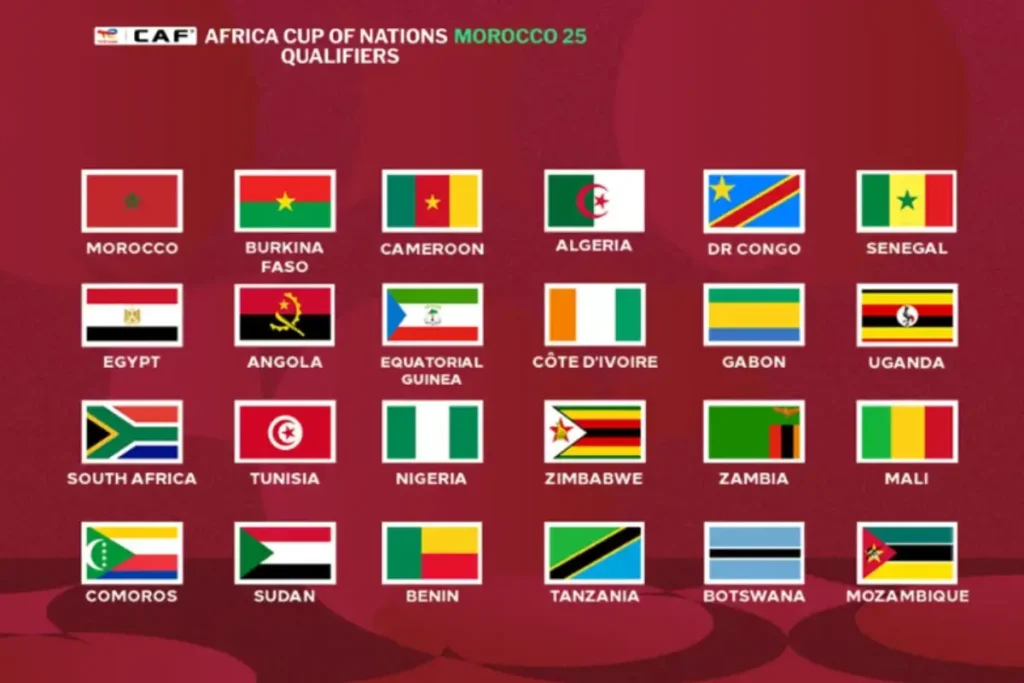
Twenty-four teams from across Africa secured qualification for AFCON 2025. The tournament draw, held in Rabat earlier this year, produced some fascinating group matchups.
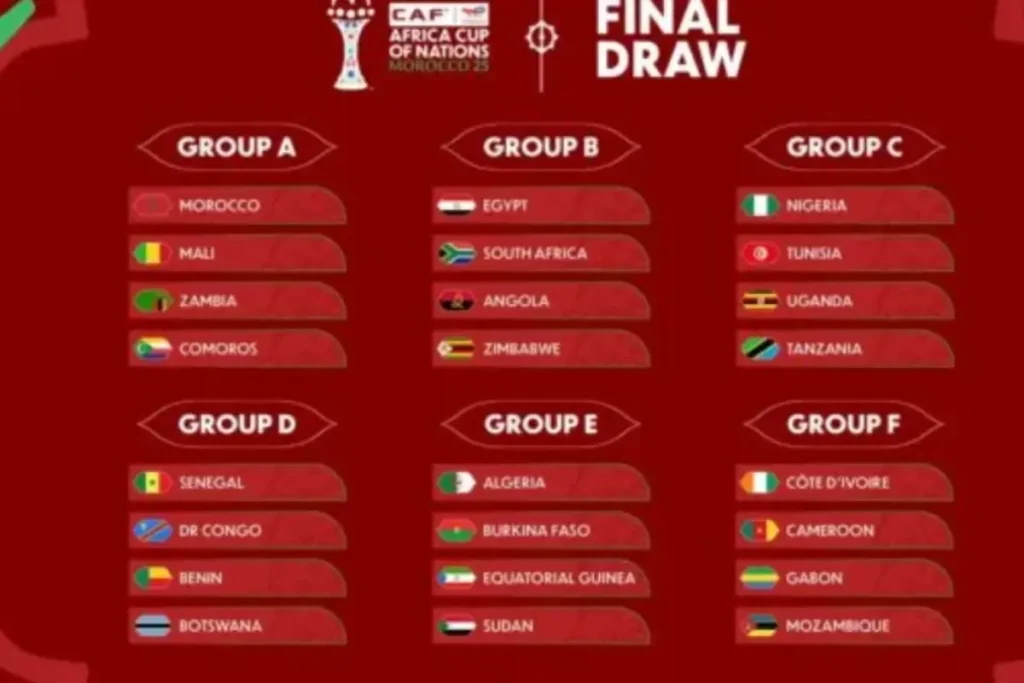
Group A
- Morocco (host nation)
- Mali
- Zambia
- Comoros
Analysis: A tricky group for Morocco, who face two strong West African sides and a fast-improving Comoros team that stunned many in previous tournaments.
Group B
- Egypt
- Burkina Faso
- Cape Verde
- Tanzania
Analysis: Egypt, the record seven-time champions, will look to dominate, but Cape Verde and Burkina Faso are known for springing surprises.
Group C
- Nigeria
- Ghana
- Guinea
- Angola
Analysis: This “Group of Death” features two West African giants — Nigeria and Ghana — rekindling their fierce rivalry. Guinea and Angola add depth and unpredictability.
Group D
- Senegal
- DR Congo
- Benin
- Botswana
Analysis: Defending 2021 champions Senegal will be favorites, but DR Congo’s physical style could cause problems. Benin and Botswana will look to shock the heavyweights.
Group E
- Algeria
- South Africa
- Uganda
- Central African Republic
Analysis: Algeria seeks redemption after early exits in recent editions, while South Africa continues to rebuild. Uganda and CAR enter as underdogs with little to lose.
Group F
- Ivory Coast (defending champions)
- Cameroon
- Gabon
- Mozambique
Analysis: Another group packed with history. Ivory Coast and Cameroon are two of AFCON’s most decorated nations, while Gabon’s flair and Mozambique’s energy make this one of the toughest groups.
With such balanced groups, fans can expect drama from day one. The presence of both traditional powerhouses and ambitious underdogs ensures that no match will be a formality.
5. Players and Coaches to Watch
AFCON has always been a stage where African stars shine on the continental level, often after dazzling in Europe’s biggest leagues. The 2025 edition will be no different, with several world-class names expected to lead their nations.
Star Players
- Mohamed Salah (Egypt): Still one of the most feared forwards in the world, Salah will aim to finally secure AFCON glory after coming close in 2017 and 2021.
- Sadio Mané (Senegal): The talisman of Senegal’s golden generation, his leadership and experience remain crucial.
- Achraf Hakimi (Morocco): The PSG defender is central to Morocco’s ambitions, combining defensive strength with attacking flair.
- Victor Osimhen (Nigeria): One of Europe’s most lethal strikers, Osimhen’s goals will be vital if Nigeria is to reclaim continental dominance.
- Franck Kessié (Ivory Coast): The powerful midfielder will anchor the defending champions’ midfield.
Rising Talents
Fans should also watch for Fiston Mayele (DR Congo), a prolific striker in African club football, and Abdoulaye Doucouré (Mali), whose presence in midfield adds bite and creativity.
Coaches to Follow
- Walid Regragui (Morocco): After guiding Morocco to a World Cup semifinal in 2022, he will aim to add continental silverware at home.
- Aliou Cissé (Senegal): The longest-serving African coach, respected for building consistency and unity in Senegal’s squad.
- Jean-Louis Gasset (Ivory Coast): Having steered the Elephants to the 2023 title, his tactical nous will be under scrutiny as champions defend their crown.
With a mix of legends, rising stars, and tactical masterminds, AFCON 2025 promises a showcase of footballing excellence.
6. Schedule and Key Fixtures
The tournament kicks off on 21 December 2025 with hosts Morocco facing Comoros at the Prince Moulay Abdellah Stadium in Rabat. From there, the group stage will run until early January, followed by the knockout rounds.
Key Dates
- Group Stage: 21 December 2025 – 5 January 2026
- Round of 16: 7–10 January 2026
- Quarterfinals: 12–13 January 2026
- Semifinals: 15 January 2026
- Final: 18 January 2026 (Rabat)
Must-Watch Group Matches
- Morocco vs Mali (Group A): A test of the hosts’ strength against a rising force.
- Nigeria vs Ghana (Group C): One of Africa’s fiercest rivalries, sure to capture continental attention.
- Ivory Coast vs Cameroon (Group F): Two giants with rich AFCON history meeting in a decisive group clash.
- Senegal vs DR Congo (Group D): Champions of 2021 against a physically dominant opponent.
Every group has at least one blockbuster tie, ensuring global fans will be glued from the opening whistle. The knockout rounds are expected to deliver even more drama, with penalties, extra time, and iconic upsets a hallmark of AFCON history.
7. Predictions and Favorites
The Africa Cup of Nations has a long tradition of unpredictability. While favorites often dominate early stages, the knockout rounds have produced legendary upsets. AFCON 2025 is unlikely to be any different.
Favorites
- Morocco: With home advantage and a squad stacked with European-based talent, Morocco enters as one of the strongest contenders. Their World Cup 2022 run proved they can compete with the best, and now they will try to replicate that success in front of their fans.
- Senegal: The Lions of Teranga remain Africa’s most consistent side in recent years. With Sadio Mané, Kalidou Koulibaly, and Édouard Mendy leading the charge, Senegal will aim to win a second title in four editions.
- Ivory Coast: As defending champions, the Elephants boast both pedigree and confidence. Players like Sébastien Haller and Franck Kessié bring firepower and balance.
Dark Horses
- Mali: With a youthful and energetic squad, Mali could surprise established teams. Their midfield strength makes them difficult to break down.
- Zambia: Former champions with a passionate following, Zambia always enter as dangerous underdogs capable of stunning bigger names.
Potential Surprises
AFCON history has seen minnows shine — think Zambia in 2012 or Comoros in 2021. In 2025, teams like Comoros or Cape Verde could play the spoiler role, upsetting favorites and rewriting the script.
While predictions are bold, AFCON thrives on its drama. One thing is certain: the path to the 2025 trophy will be fiercely contested.
8. Fan Experience and Travel Guide
For fans, AFCON 2025 offers more than football — it’s a chance to experience Morocco’s rich culture and hospitality.
Travel and Access
- Airports: Casablanca’s Mohammed V International and Marrakech Menara International are the main entry points for international visitors. Rabat and Tangier also serve as alternatives.
- Transport: Morocco has an efficient rail system connecting major cities, alongside buses and domestic flights for longer distances.
Accommodation
From luxury hotels in Casablanca to boutique riads in Marrakech, Morocco provides options for every budget. Early booking is recommended, especially around Rabat and Casablanca during key fixtures.
Stadium Atmosphere
Moroccan fans are renowned for their passion. Matches in Casablanca’s Stade Mohammed V, in particular, promise unforgettable noise and energy. Visitors should expect a carnival-like atmosphere with songs, drums, and endless chants.
Beyond Football
Fans can enrich their trip by exploring:
- The souks of Marrakech and Fes for spices, textiles, and handicrafts.
- The Sahara Desert for camel treks and stargazing.
- Moroccan cuisine, from tagine and couscous to mint tea.
With the Moroccan government investing in fan facilities, AFCON 2025 promises to be one of the most accessible and enjoyable editions ever hosted.
9. Storylines to Follow
Every Africa Cup of Nations writes its own storylines, and 2025 already carries plenty of intrigue.
- Morocco’s Homecoming: Hosting for the first time since 1988, Morocco faces the pressure of delivering both on and off the pitch. The question remains: can the Atlas Lions ride home support to their first AFCON title since 1976?
- Senegal’s Golden Generation: Having won their first AFCON in 2021, Senegal’s golden generation is nearing its peak. This tournament may be one of the last opportunities for stars like Mané and Koulibaly to shine together.
- Ivory Coast’s Title Defense: Fresh from lifting the 2023 crown, the Elephants must prove they can repeat the feat against even stronger opposition. Their group, featuring Cameroon and Gabon, will be a true test.
- Traditional Rivals Collide: Nigeria vs Ghana in Group C promises fireworks, rekindling one of Africa’s fiercest rivalries on the biggest stage.
- Underdog Ambitions: Teams like Comoros, Cape Verde, and Botswana arrive with nothing to lose. Past tournaments have shown how smaller nations can steal the spotlight.
These narratives add depth and excitement, ensuring that AFCON 2025 will be remembered for more than just results.
10. How to Watch
AFCON 2025 will enjoy wide coverage across Africa and beyond. CAF is expected to announce official broadcast partners closer to the tournament, but fans can expect:
- Pan-African Coverage: SuperSport, Canal+ Afrique, and national broadcasters will show matches live.
- International Access: Major networks in Europe, the Middle East, and North America are likely to secure rights. Streaming platforms will also offer live coverage for global fans.
With matches spread across prime viewing hours, millions worldwide will tune in, making AFCON one of the most-watched football tournaments of 2025.
11. Conclusion
The 2025 Africa Cup of Nations promises to be a festival of football, culture, and continental pride. Morocco’s role as host adds a unique dimension, blending world-class infrastructure with unforgettable atmospheres. With 24 teams, legendary players, and fierce rivalries, the competition will showcase the very best of African football.
Whether it’s Morocco chasing glory on home soil, Senegal’s golden generation fighting for immortality, or underdogs dreaming of history, AFCON 2025 guarantees drama and passion in equal measure.
For fans in the stadiums and millions watching worldwide, this tournament is more than sport — it’s a celebration of Africa’s enduring love for the beautiful game.
Frequently Asked Questions about 2025 Africa Cup of Nations
Where will the 2025 Africa Cup of Nations be held?
The 2025 AFCON will be hosted in Morocco, marking the country’s first time hosting the tournament since 1988. Matches will take place in cities including Rabat, Casablanca, Marrakech, Agadir, and Tangier.
When does AFCON 2025 take place?
The tournament runs from 21 December 2025 to 18 January 2026, a unique scheduling shift to avoid clashes with FIFA’s expanded Club World Cup.
How many teams are competing in AFCON 2025?
A total of 24 national teams will compete, divided into six groups of four. The top two teams from each group, along with the four best third-placed teams, will advance to the Round of 16.
Who are the favorites to win AFCON 2025?
Top contenders include Morocco (hosts), Senegal (2021 champions), and Ivory Coast (2023 champions). Nigeria, Algeria, and Egypt are also strong challengers.
Which players should fans watch out for?
Key stars include Mohamed Salah (Egypt), Sadio Mané (Senegal), Achraf Hakimi (Morocco), Victor Osimhen (Nigeria), and Franck Kessié (Ivory Coast). Rising talents like Fiston Mayele (DR Congo) could also surprise.
How can fans watch the matches in Morocco AFCON 2025?
CAF will announce official broadcasters closer to the tournament, but SuperSport, Canal+ Afrique, and local African channels are expected to show matches. Internationally, major networks and streaming platforms will provide coverage.
Why is the matches in Morocco AFCON 2025 being played in December?
AFCON 2025 was moved to December–January to avoid overlapping with FIFA’s new Club World Cup and to ease scheduling conflicts with European leagues.
What makes AFCON special compared to other tournaments?
AFCON combines top-level football with unmatched passion, vibrant fan culture, and the chance for underdogs to upset giants — making it one of the most unpredictable tournaments in world football.